

Trying to Build a Path in the Tenryu Forest
Lumberjack Activity Report #3
On July 16, 2021, we carried out work to build a path for transporting trees in Kicoro Forest, Tenryu Ward, Hamamatsu City, Shizuoka Prefecture.
Building a Path by Hand
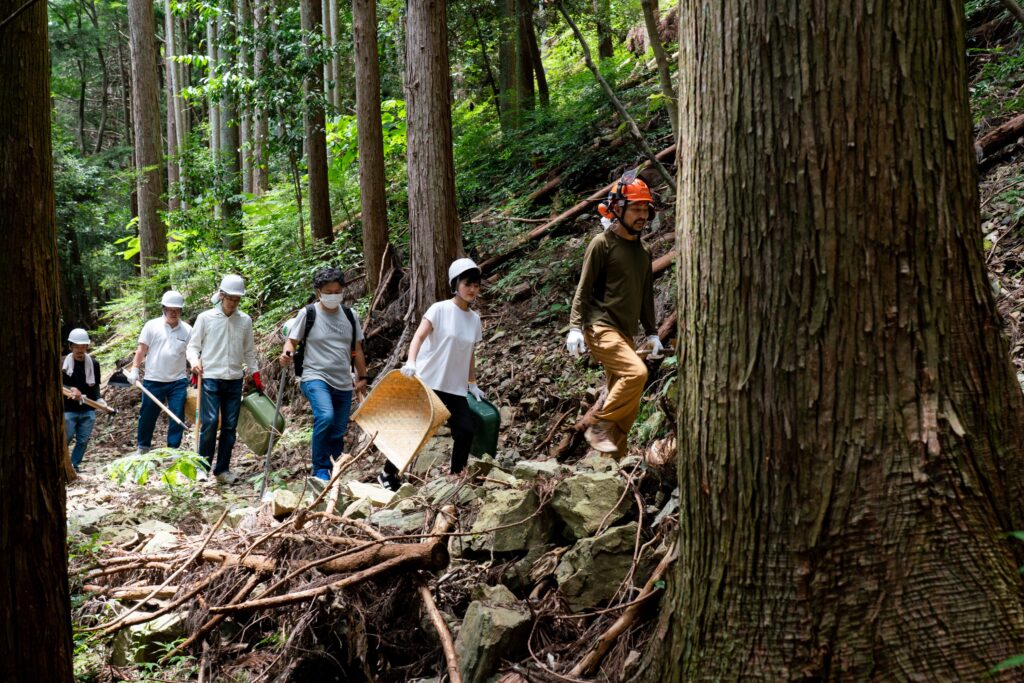
In this lumberjack activity, we challenged ourselves to create a path using only pickaxes and mattocks—experiencing the wisdom of our predecessors firsthand. We split into teams for digging, carrying earth, and clearing brush. By the end of the day, we built 20 meters of path, far exceeding our original goal of just 1 meter.
Following Nature
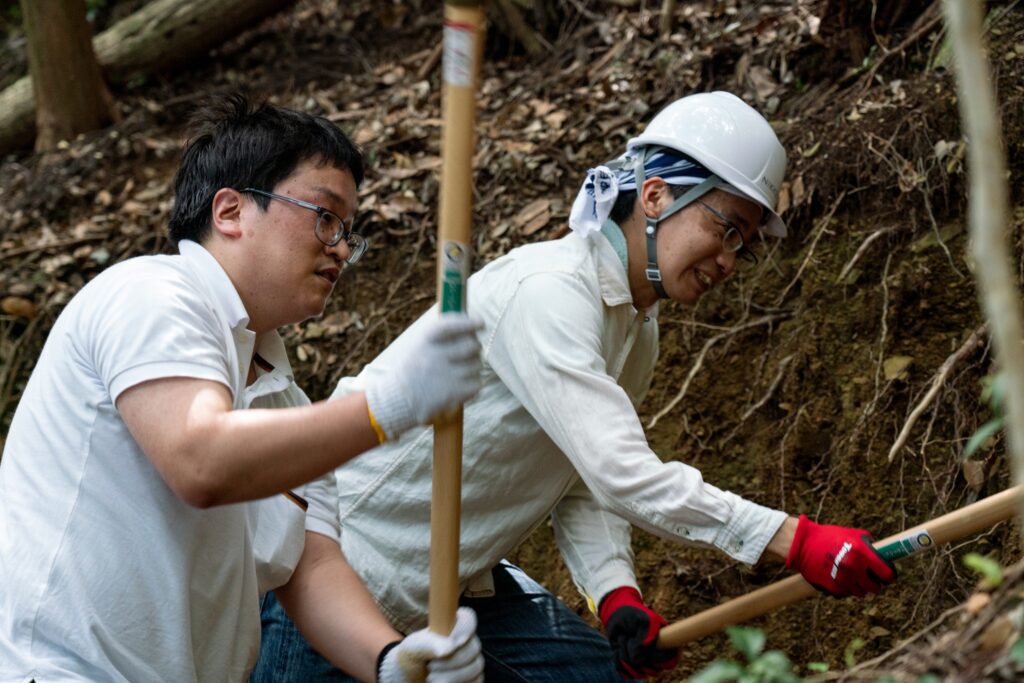
The goal of Kicoro Forest is to build paths with as little impact on nature as possible. We avoid piling up soil, steer clear of rocks and large trees, and make paths just wide enough for small work vehicles. To reinforce the roadside, we use dug soil and stones, plant saplings on slopes to strengthen the path, and angle the roadside so rainwater can escape, reducing erosion.
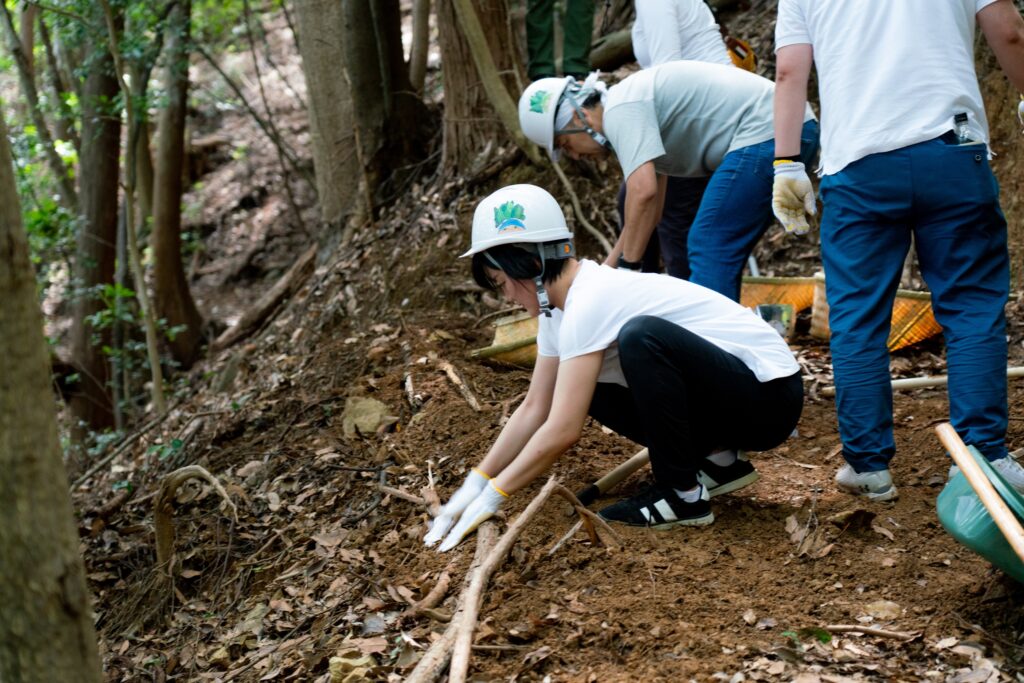
Maeda san said:
“There is nothing unnatural in nature. If you create something unnatural, nature will push it away and return it to its natural state.”
Learning from the Wisdom of Ancestors
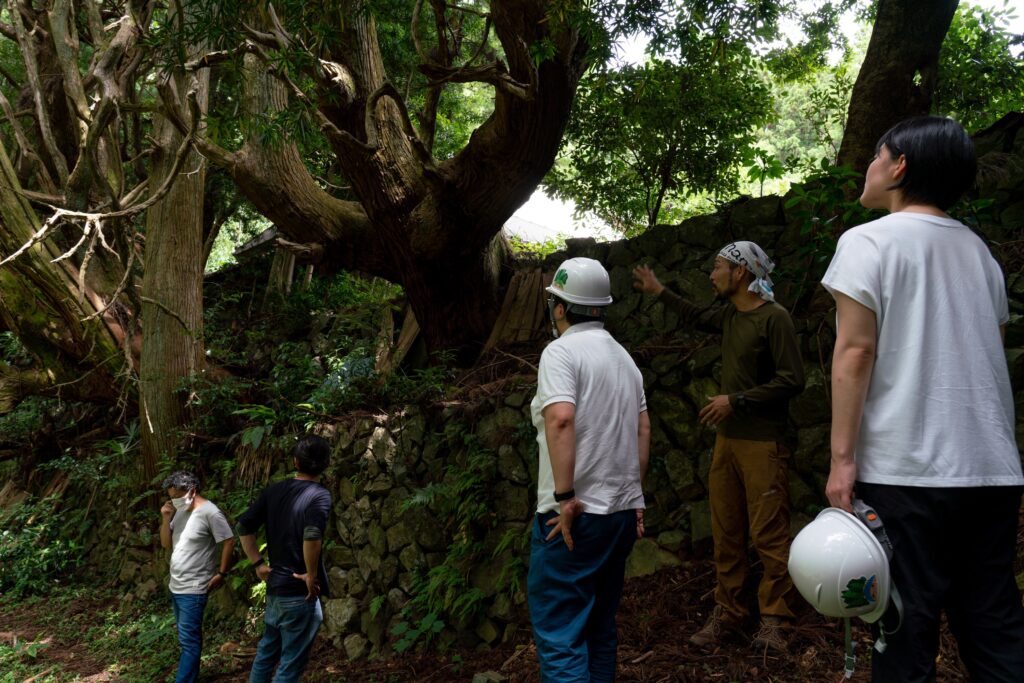
In Kicoro Forest, traces of an old highway remain, featuring ancient stone walls and large cedar trees dating back to the Muromachi period (14th-16th centuries). These grown cedars now block the path.
Looking closer, the tree roots are intertwined with the stone walls, supporting each other and enduring for 500 years.
“Modern thinking would have us cut down these obstructive trees. But why are they still here? I believe our ancestors knew that the strongest structures were those built with nature’s help. Observing recent natural disasters, I think it’s time to relearn what our ancestors valued.”
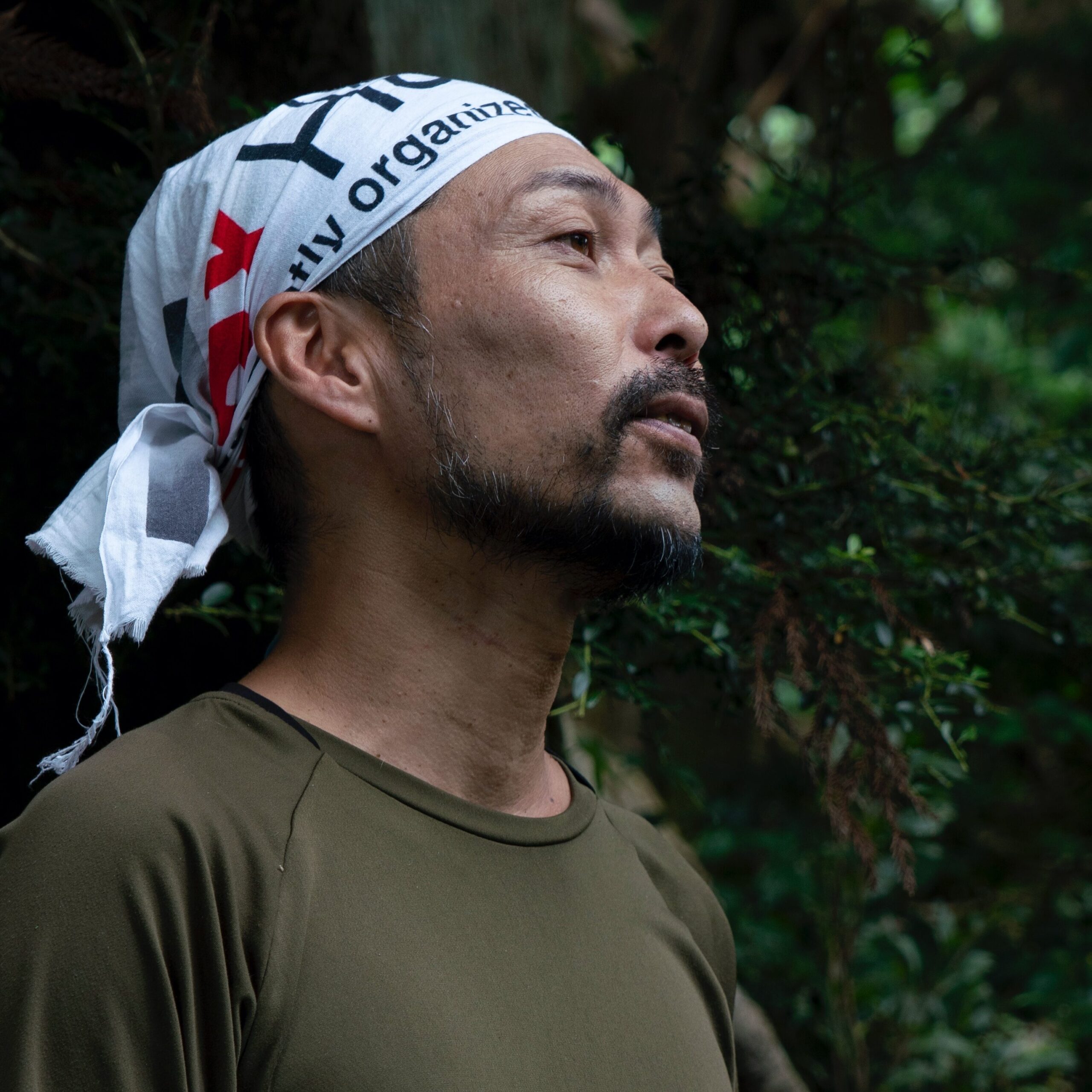
[Today’s Teacher] Tsuyoshi Maeda, Lumberjack/Representative of Kicoro
Since moving to Tenryu in 2003, Maeda san has dedicated himself to forestry. He also works to share the beauty and importance of forests through activities like FUJIMOCK FES, where participants experience everything from cutting trees to crafting wood items. In addition, he gives lectures at schools to inspire the next generation.
Participant Comments
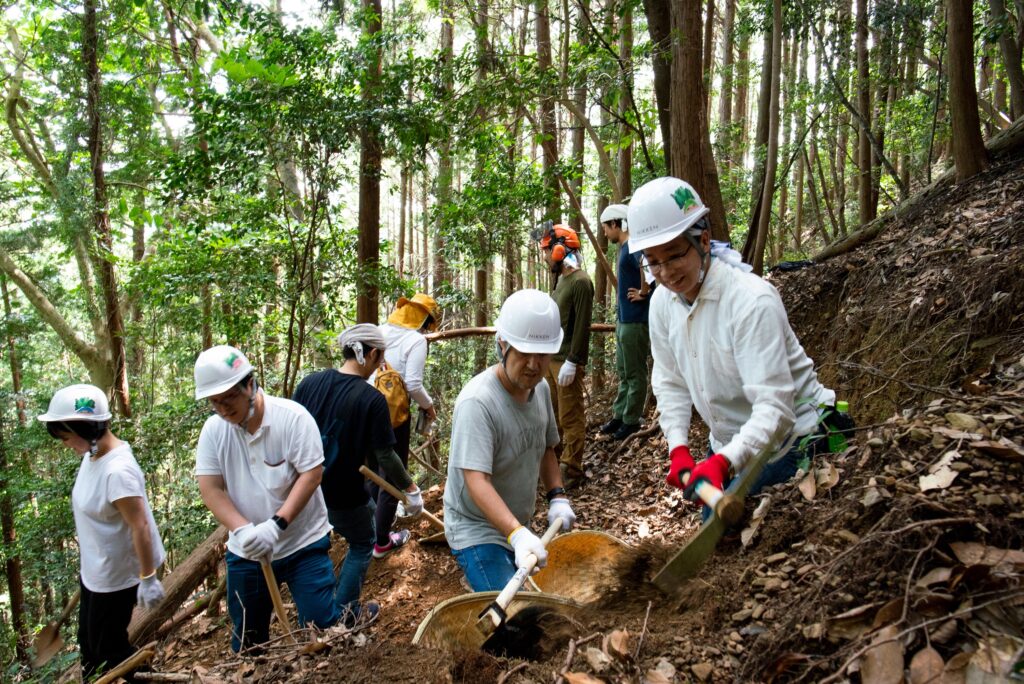
Tanaka:
“I’ve joined all the activities from the start, but this time was the most exhausting! Still, it was fun to think about where to direct water and how to reinforce the roadside while working.
Takada:
“I learned that the wood we use every day goes through many processes before it reaches us—not just cutting down trees. It was tiring!”
Uchida:
“It’s great to work in the mountains with colleagues like this. Today we built a path, but I also wanted to try cutting trees. Experiencing the whole process would deepen my understanding of why path-building is so important.”
Yoshioka:
“Working without machines this time taught me a lot. Feeling the mountain’s slight slopes, figuring out how to harden the roadside soil, and watching everyone naturally take on roles and work together was really interesting.”
Thoughts and Beyond
Relay column by NCM employees Participating in the Lumberjack Activities
Growing up in Nagoya, I had a short-term mountain village study experience in Toyone Village, Oku-Mikawa, during an elementary school summer vacation. One day, we learned why and how to fell trees in a pathless mountain. My classmates and I took turns using hatchets and saws to cut down trees and prune branches. This is my earliest memory of interacting with the forest.
Nearly 30 years later, I entered the forest again to care for trees. It was a precious opportunity to reconnect with nature while recalling those vague childhood memories.
This time, I joined the path maintenance work for transporting trees. Since tree growth cycles span decades, it will be many years before we use the same path again. Over time, paths created by human hands naturally return to their original state due to rain and wind. That’s why it’s important to build paths that work with nature, not against it.
Interacting with the forest places you in a timeframe far beyond a human lifetime. While creating a single path, I felt a strong desire to keep engaging with Japan’s mountain forests—imagining their natural state in the distant future.
Shuichi Sakuma
Director, Nikken Sekkei Construction Management (NCM)
Related articles
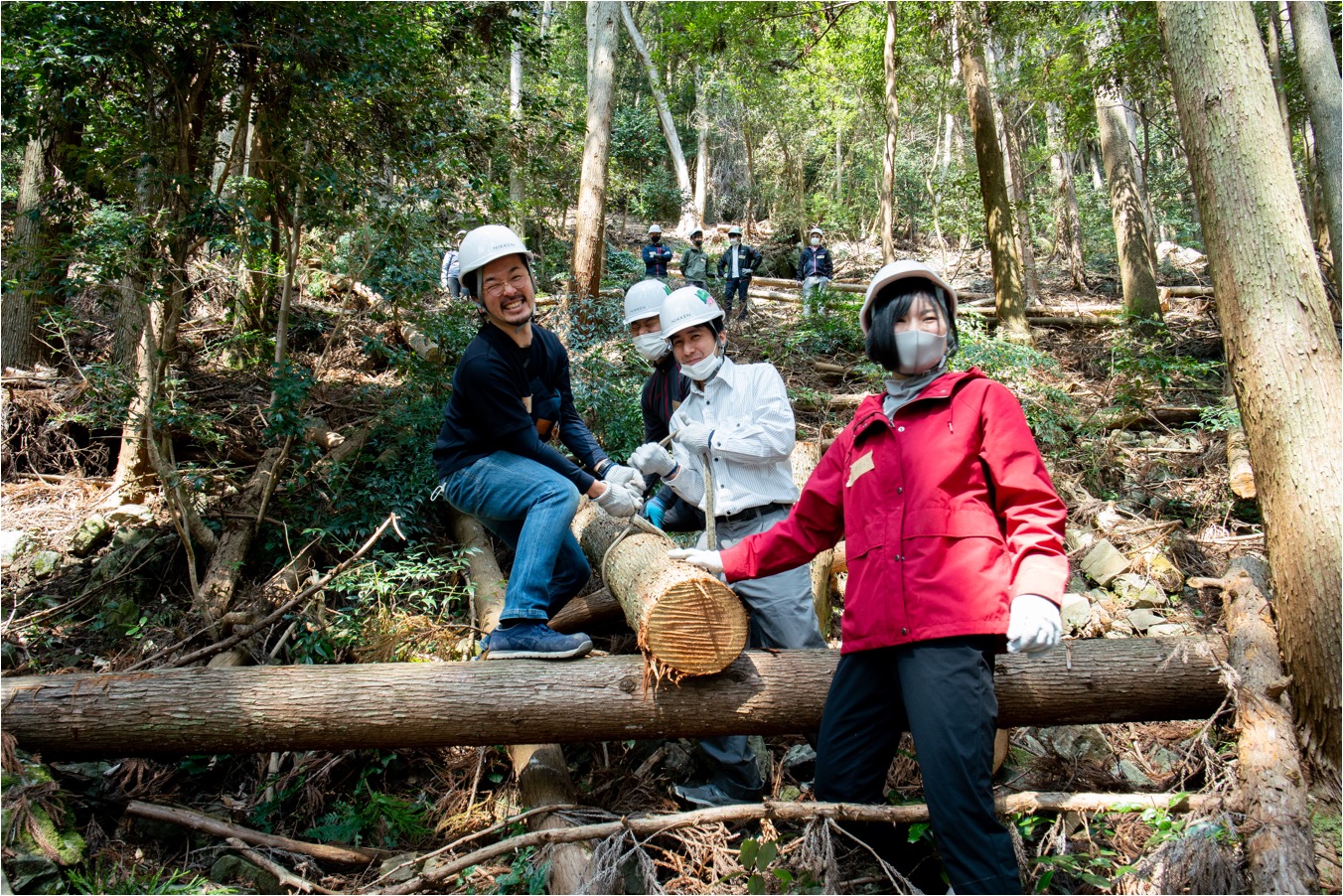
Transporting Trees in Tenryu Forest
[Lumberjack Activity Report #2] Four months after our first lumberjack experience, we returned to meet Maeda san, the lumberjack, in Kicoro Forest, Tenryu Ward, Hamamatsu City, Shizuoka Prefecture. This time, we carried the cedar trees we had cut down ourselves, following the traditions of those who came before us, and sawed them into boards. The experience was exciting and full of new discoveries—almost as …
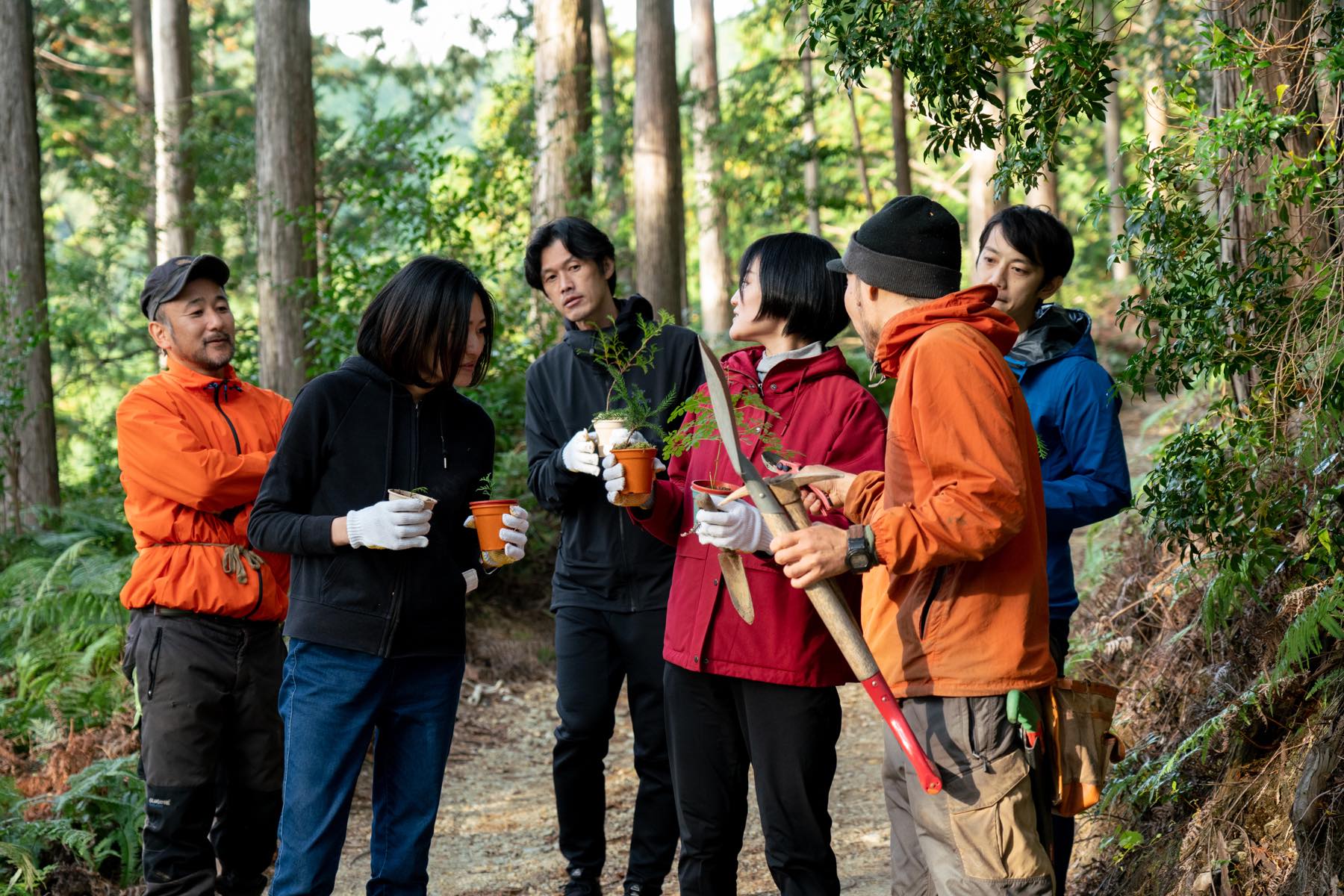
Thinking About Reforestation in the Tenryu Forest
[Lumberjack Activity Report #4] Visiting the Tenryu Forest with Over 300 Years of History On November 12, 2021, our lumberjack team visited the Suzuki family forest in Tenryu Ward, Hamamatsu City, Shizuoka Prefecture—a forest that has been carefully maintained for over 300 years. Managed by the 12th-generation head, Masayuki Suzuki, it forms a stunning landscape worthy of the name “Tenryu Beautiful Forest.” In the …
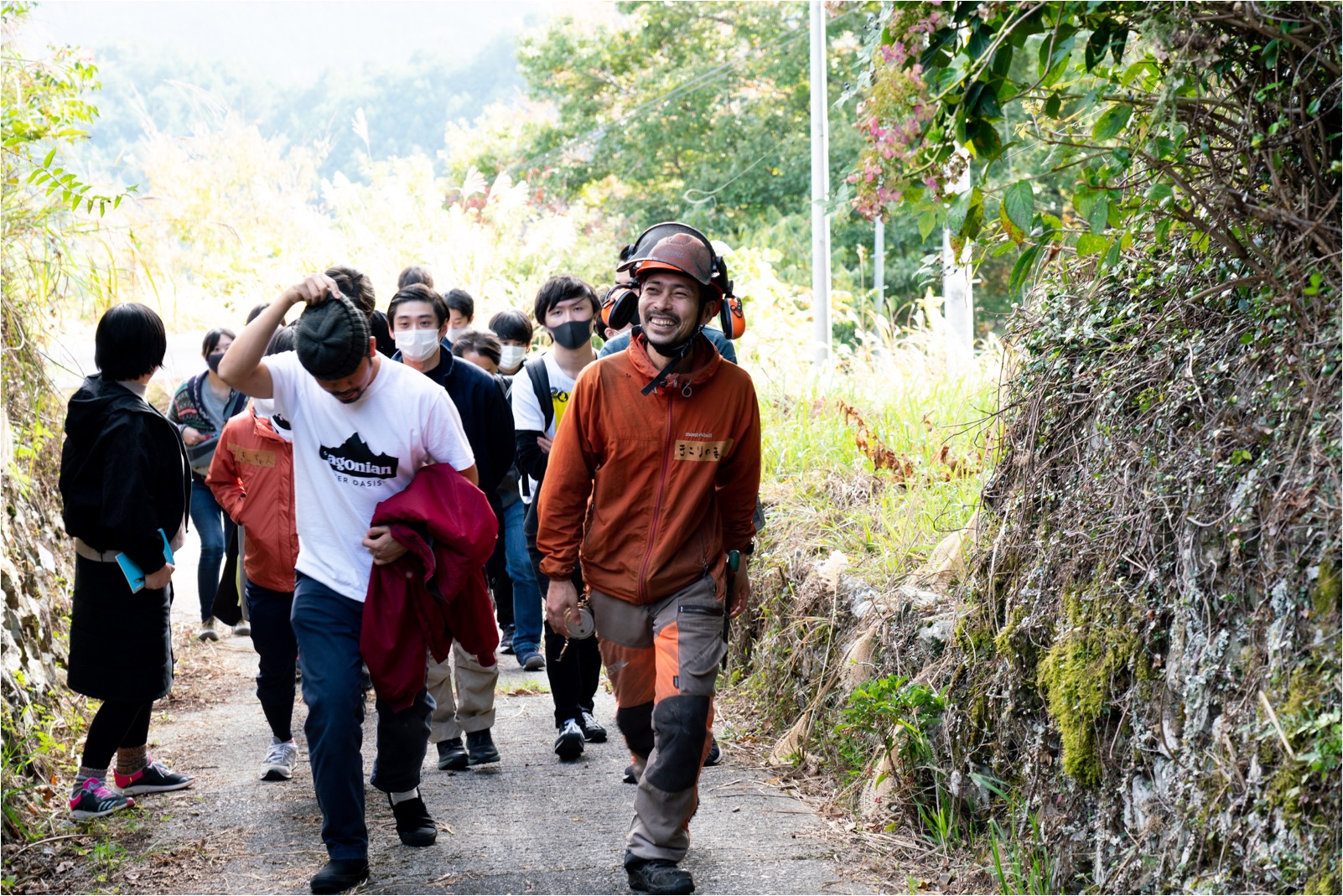
Cutting Trees in Tenryu Forest in Shizuoka Prefecture, Japan
[Lumberjack Activity Report #1] Located in the central region of Honshu, Japan in Hamamatsu City, Shizuoka Prefecture, Tenryu Ward is a major forestry area, with about 90% of its area covered in forest, 80% of which are artificial forest. Known as one of Japan’s three great artificial forests, the “Tenryu Beautiful Forest” boasts a history of 500 years. This time, we visited Tsuyoshi Maeda, who …
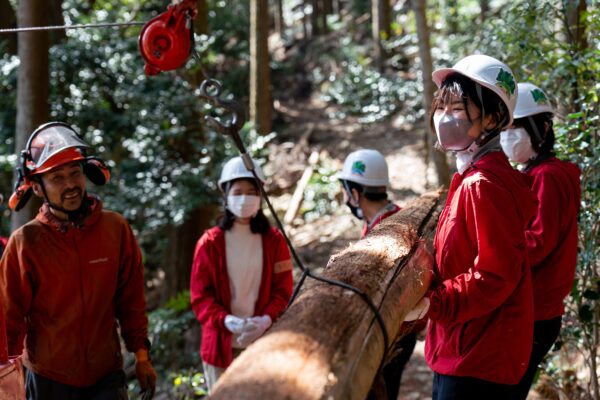
Using Tenryu Wood
[Lumberjack Activity Report #5] This lumberjack activity lets us experience how thinned wood from Tenryu Forest is processed and utilized in our office. We will see firsthand how logs from the forest are transformed into wooden products—becoming companions in our daily work. March 16, 2022In Kicoro Forest, Tenryu Ward, Hamamatsu City, Shizuoka Prefecture, we carried out collection work using a small timber transporter. The …
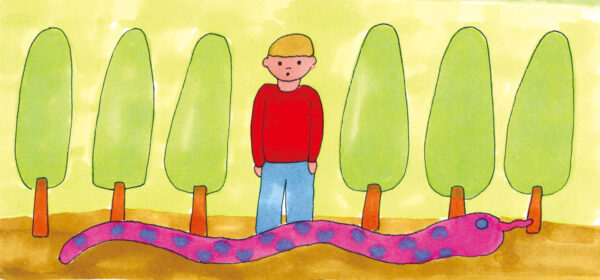
Forest and Wild Animals
What should you do if you encounter wild animals in the forest? We learned from lumberjack Mr. Maeda. Bears If you turn your back and run, the bear may chase and attack you. Instead, keep facing the bear and slowly back away. Throwing an items you’re carrying can also distract the bearand help you escape. Snakes Moving quickly can provoke …
