
SeriesInto Taiwan’s Beautiful Forests
Located about 107 kilometers from Japan’s Yonaguni Island, Taiwan lies in the Pacific Ocean in East Asia. Owing to its lush greenery and beautiful island landscape, it was once called “Formosa,” meaning “beautiful island” in Portuguese. Roughly the same size as Kyushu, about 60% of Taiwan’s land is covered by dense forests. These forests are home to a remarkable diversity …
At the forefront of Taiwan’s green forestry
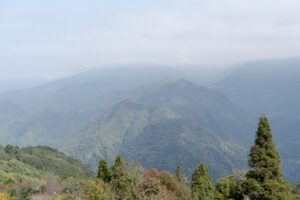
To the Mysterious ‘Cloud Forest’
It takes about 30 minutes from Taipei by Taiwan High Speed Rail (THSR). Hsinchu Station was bustling with people from early morning. This is the nearest station to the headquarters of TSMC (Taiwan Semiconductor Manufacturing Company), known as the world’s largest semiconductor foundry. TSMC employees commuting by high-speed rail streamed off the platform all at once.
TSMC is said to be referred to in Taiwan as the ‘TSMC, the Mountain God that Protects the Nation’, signifying its importance in supporting Taiwan in terms of both the economy and national security. This term, ‘Mountain God that Protects the Nation’, originally referred to the Central Mountain Range, which runs north to south through the island.In Taiwan, where more than 200 mountains over 3,000 metres high stretch across the landscape, the mountains are guardian deities that protect people from typhoon damage and bring abundant blessings.
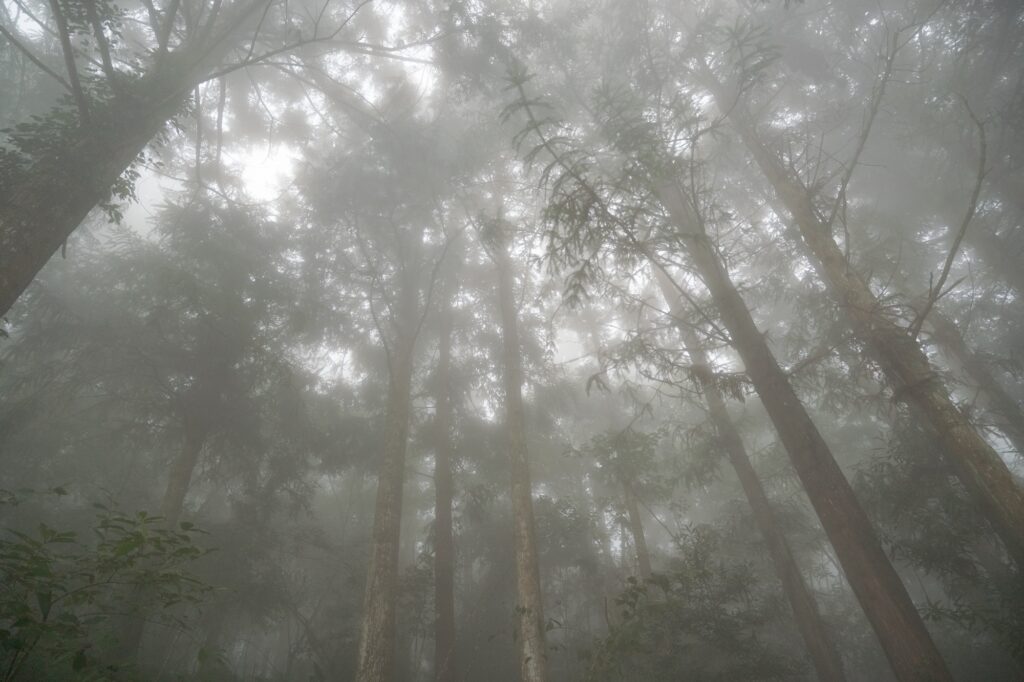
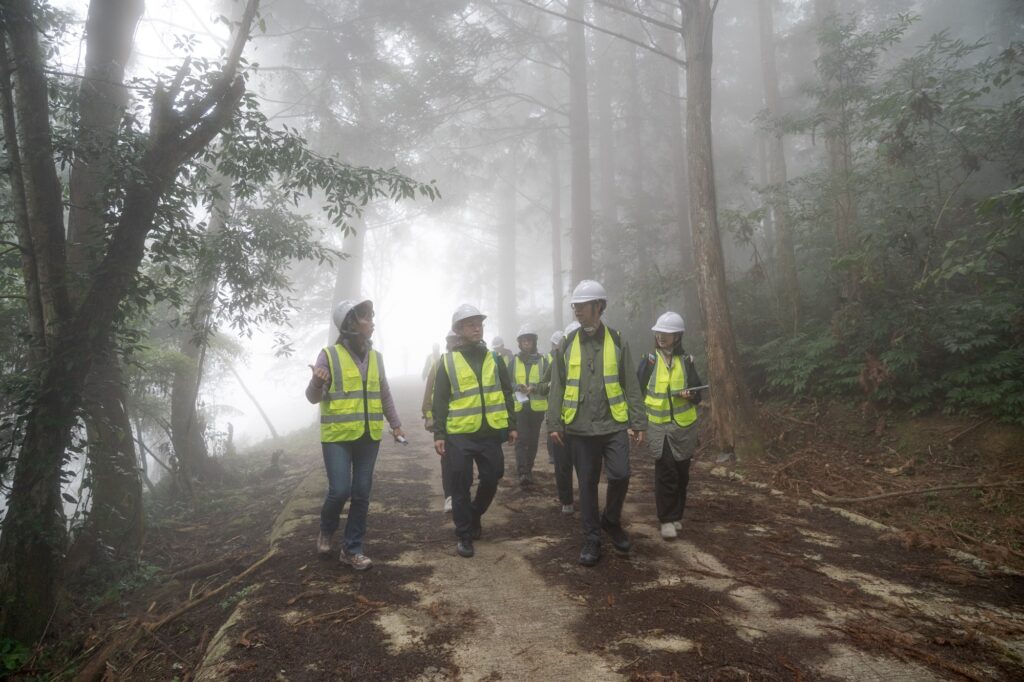
An hour’s drive from Hsinchu Station took us to the Sustainable Forestry Management Area in Nanzhuang, Miaoli County, situated on the western foothills of the Snow Mountain Range. As we climbed the mountain, the car was soon enveloped in a thick white mist, and we found ourselves driving through a forest known as a cloud forest.Cloud forests are forests found in high-altitude regions of the tropics and subtropics, characterised by heavy fog and rain; they are a globally rare forest ecosystem found in Japan only in a few areas, such as Yakushima.
FSC-certified forests protecting a precious ecosystem
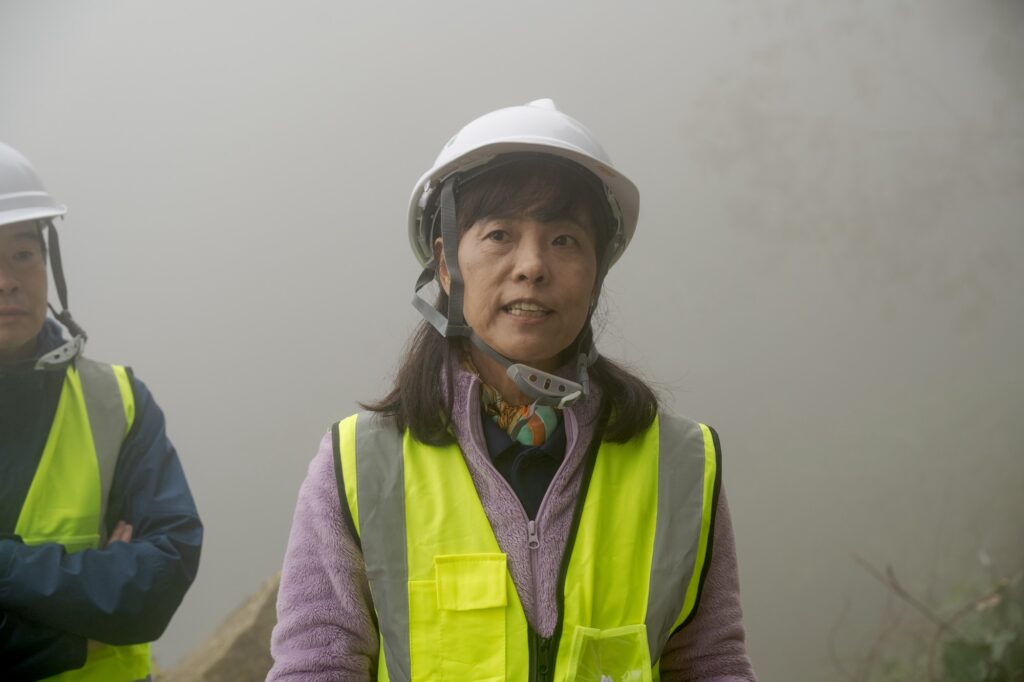
At the meeting point, we were greeted by Director SHIA Jung-Sheng of the Hsinchu Branch of the Forestry and Nature Conservation Agency (hereinafter referred to as the Forestry and Nature Conservation Agency), along with staff from the Agency, Mr Ronnie Huang, Manager of the FSC Taipei Office, and Mr. KEN Chih-You, an tribal elder of the Saisiyat along with members of the tribe. The Saisiyat are one of the 16 indigenous peoples*1 recognised by the Taiwanese authorities, and they live across the border between Hsinchu and Miaoli counties.
Director SHIA said, “Welcome. The Hsinchu Branch is one of eight branches of the Forestry and Nature Conservation Agency nationwide, and the Nanzhuang area here falls under the jurisdiction of the Hsinchu Branch. In Taiwan, we have been working towards obtaining FSC certification*2since 2018, and all state-owned forests*3 within our jurisdiction have now achieved FSC certification. This mountainous forest area obtained certification two years ago, and this year marks its third year.”
The Sustainable Forest Management Area in Nanzhuang is a forestry site jointly managed by the Forestry and Nature Conservation Agency and the Saisiyat of Taiwan’s indigenous peoples, following a partnership formed in 2018. By practising sustainable forest management that utilises the traditional wisdom of the Saisiyat, they aim to protect the precious ecosystem of the cloud forest, whilst also working towards the economic development of the community and the preservation of the tribe’s traditional culture.
It was in 2023 that the ‘Forestry Bureau of the Council of Agriculture, Executive Yuan’ – the equivalent of Japan’s Forestry Agency – was renamed the ‘Forestry and Nature Conservation Agency, Ministry of Agriculture’. The new name conveys a strong determination that true solutions cannot be achieved unless the revival of forestry, ecosystem conservation and the revitalisation of mountain village economies are addressed as a single, integrated forestry challenge.
Director SHIA stated, ‘In this forestry area, we are not only adhering to the 10 Principles of the FSC*4, but also tackling all challenges comprehensively, including collaboration with the local community and the establishment of an ecological network *5. Consequently, this is a crucial model case for implementing the sustainable management strategy promoted by the Taiwanese government.’
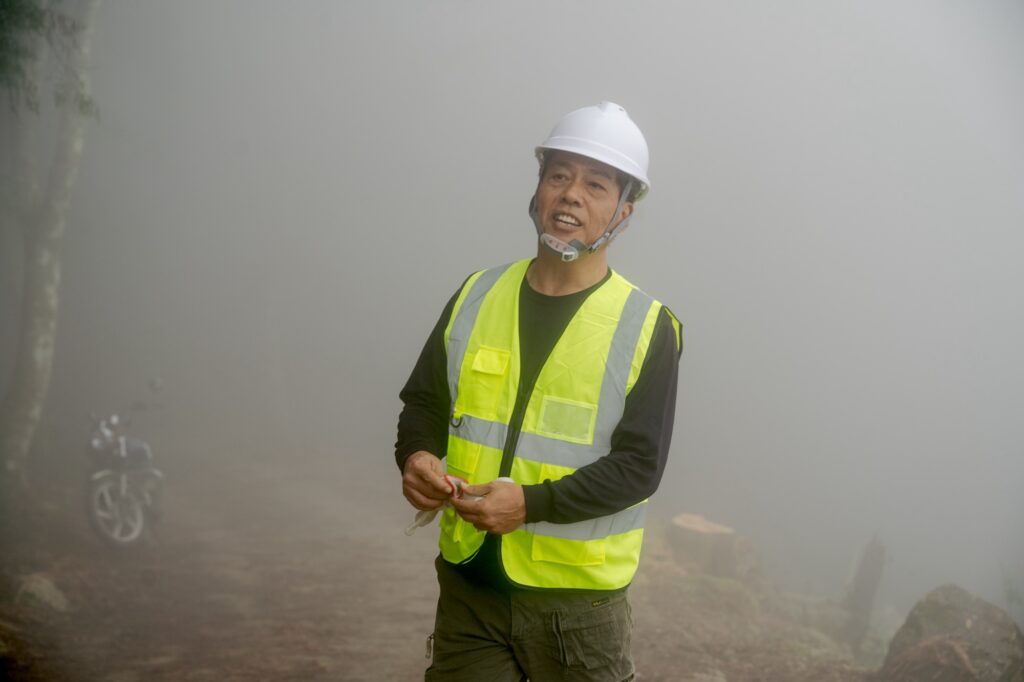
The Sustainable Forestry Management Area in Nanzhuang, home to endangered species, forestry operations are carried out with strict consideration for biodiversity conservation. When logging takes place, preliminary, interim and post-logging surveys are conducted within the development planning area, alongside monitoring via surveillance cameras. Regulations stipulate that if any Class I protected animals, as defined by the state, are discovered during these surveys—which last a minimum of three months and a maximum of six months—development must be temporarily suspended.
Mr. KEN said, “For the Saisiyat people, the benefit of obtaining FSC certification is that it respects our wishes. For example, Atsubakusunoki (Cinnamomum kanehirae) holds special significance as the Saisiyat people’s ‘Tree of Life’ and is revered, so it is not felled even within development zones.”
*1 Indigenous peoples: Taiwan officially recognizes 16 Indigenous groups with their own languages, cultures, and traditions, mainly in eastern and mountainous regions. The term Indigenous Peoples is used to reflect terminology used in Taiwan.
*2 FSC (Forest Stewardship Council): An international forest certification scheme aimed at promoting sustainable forest management worldwide from the perspectives of environmental conservation, social benefits and economic viability.
*3 State-Owned Forests: In this article, State-Owned Forests refers to “國有林”, a forest ownership category under Taiwan’s forestry legislation, distinct from public and private forests, reflecting usage in Taiwan for clarity.
*4 FSC’s 10 Principles: Legality, Workers’ Rights, Rights of Indigenous Peoples, Relations with Local Communities, Benefits from Forests, Environment, Management Plan, Monitoring, High Conservation Value, Implementation of Management Activities
*5 Ecosystem network: An initiative to organically connect habitats (core areas) such as forests, rivers, farmland and urban green spaces to ensure the movement and interaction of wildlife
Felling a 50-year-old Taiwan cypress
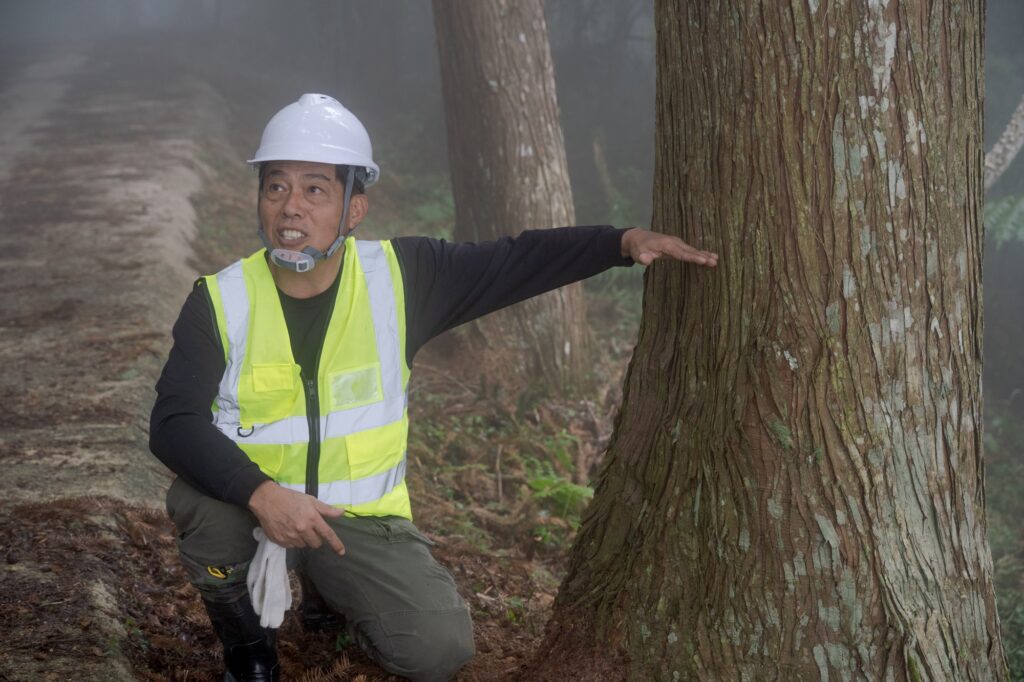
Mr. KEN: ‘This is a commercial forest planted with species native to Taiwan, such as Taiwan cypress (Cryptomeria taiwanensis) and fragrant cypress (Cryptomeria japonica). The weather is unfortunately poor today, but on a clear day, you can see the beautiful Taiwan Strait just ahead. A distinctive feature of this area is that the trees grow particularly well here. Even across the whole of Taiwan, places where Taiwan cypress grows as beautifully and as large as this are extremely rare.’
On this day, we were given the opportunity to observe the felling of a 50-year-old Taiwan cypress with a diameter of 80 cm. Due to the warm climate, the trees grow rapidly and are far larger than their Japanese counterparts of the same age. A veteran worker with 50 years’ experience in forestry was set to fell this giant tree using just a chainsaw. How does logging in Taiwan differ from that in Japan? Are there any differences in felling methods at all?
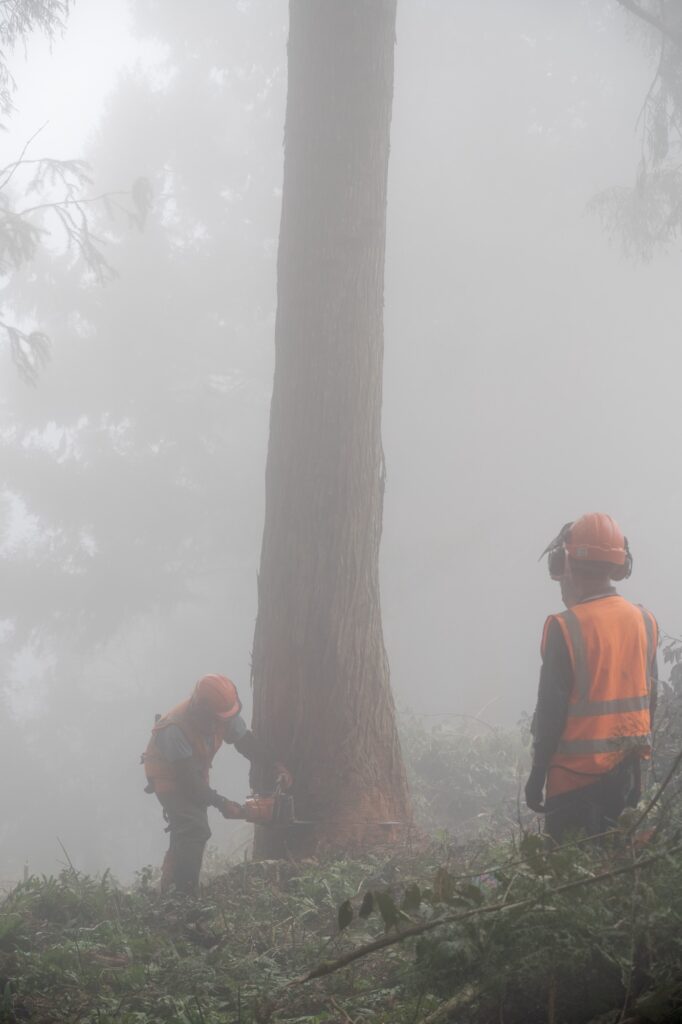
Mr. KEN: “With the introduction of FSC certification, our working conditions have improved, and we are now required to wear protective clothing during felling. Although the protective clothing is expensive and places a significant financial burden on us, the safety of forestry workers comes first.”
Amidst a forest shrouded in thick white mist, the felling of Taiwan cypress began. To be honest, I couldn’t see much through the mist, but there is no sign of them making what I recognise as a ‘felling notch’ from Japanese logging sites. A ‘felling notch’ is a cut made to ensure the tree falls safely in the intended direction; surely this is the very ‘A’ of felling? There is no use of ropes to guide the direction of the fall; instead, they insert the guide bar of the chainsaw and cut all the way round the tree. Finally, they insert a wedge, and the tree fell spectacularly in the opposite direction to the observers.
Logging techniques passed down from the Japanese
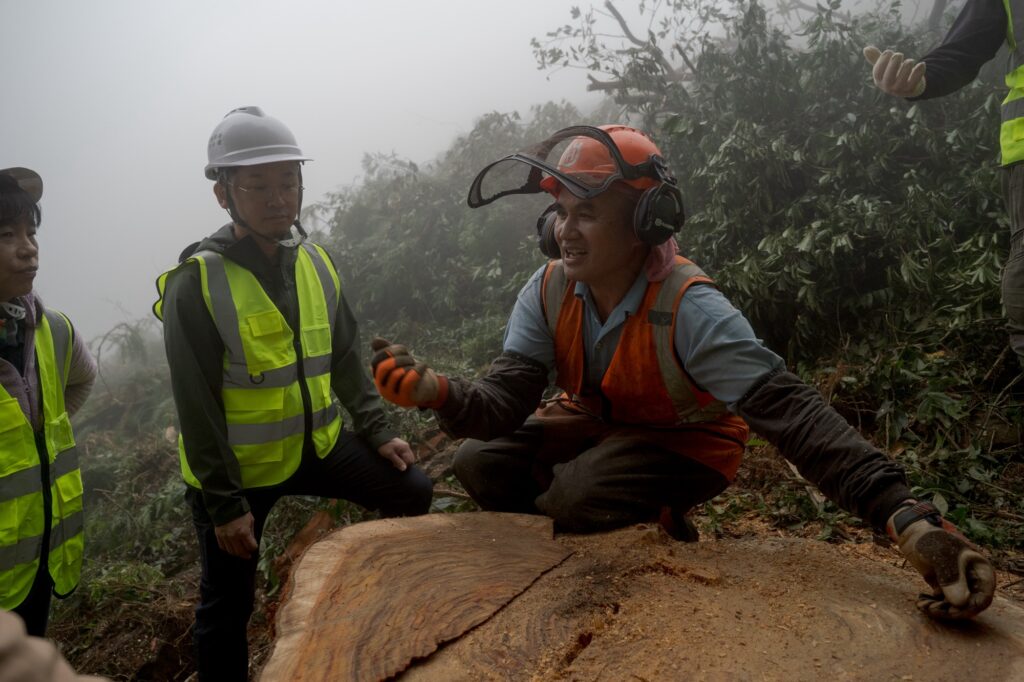
Approaching the stump to take a closer look, I noticed that, perhaps because no felling notch had been cut, the step was indeed extremely shallow. On the surface of the damp stump, one could see the wide growth rings characteristic of fast-growing trees. Taiwan cypress has a high moisture content, and a giant tree with a diameter of 80 cm is said to weigh around 10 tonnes.
As this method of felling was completely different from anything I had seen in Japan, I assumed it must be a technique unique to the Saisiyat people and asked about it, but was told, ‘It’s simply down to the skill of this craftsman.’ Then, the elder gave me an unexpected answer.
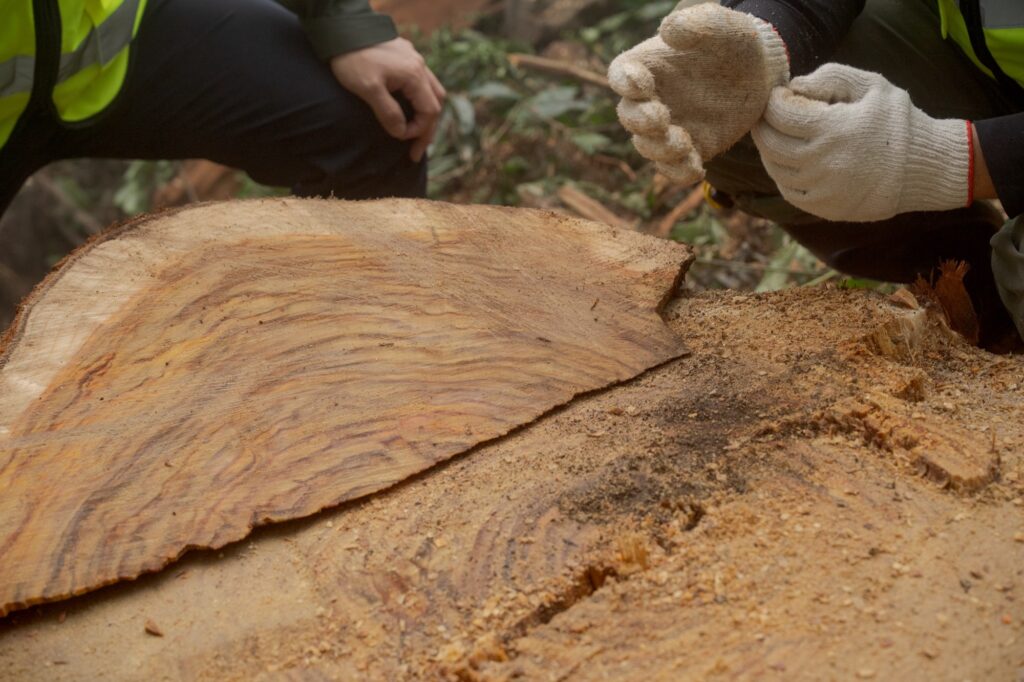
Mr. KEN: ‘We learnt these felling techniques from the Japanese during the period of Japanese rule. If one’s felling skills are lacking, cracks will form in the cross-section, leading to damage to the timber. A truly skilled craftsman is one who cuts as low as possible, leaving only the slightest unevenness in the cross-section.The Japanese of that era were also amazed by the exceptional skills of our grandfathers. The man in charge of felling today has also inherited these techniques from his grandfather, refining them through experience. Their skills are now recognised by the Taiwanese government.
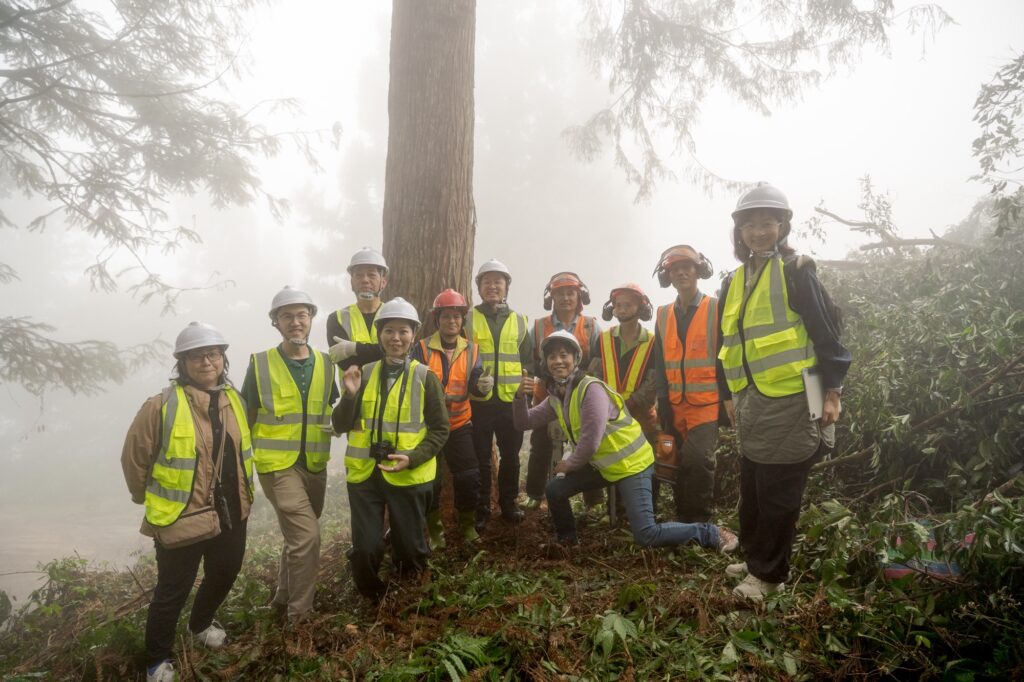
This area was once covered with natural camphor forests, the source of camphor.The Japanese first felled camphor trees in this area in 1909. By the 1910s, the Japanese had established experimental planting zones for Japanese cypress in three locations across Taiwan, and Nanzhuang became Taiwan’s first forestry area. The Japanese cypress trees first planted here by the Japanese at that time still remain today, and are over 100 years old. That tree was planted by my grandfather.”
The Saisiyat people have a painful history with the Japanese dating back to the colonial era, centred on camphor. Yet, despite this, they welcomed us warmly, saying, ‘We learnt from the Japanese,’ and for that, I can only express my deepest gratitude.
Afforestation and Environmental Activities in Taiwan

We were served a Taiwanese-style packed lunch, and in the afternoon, we were given a special opportunity to take part in a tree-planting experience.
Director SHIA: “Taiwan has many tree-planting initiatives, tailored to different target groups in each region. There are opportunities to participate in tree-planting activities in various forms, such as through companies, private organisations and schools.
In the corporate sector in particular, the Convention on Biological Diversity (CBD) *4 places great emphasis on achieving ‘nature-positive’ status *5by 2030 and on the disclosure of biodiversity risks to companies. Consequently, an increasing number of companies are finding that such experiences and participation are necessary, both conceptually and in terms of practical necessity.
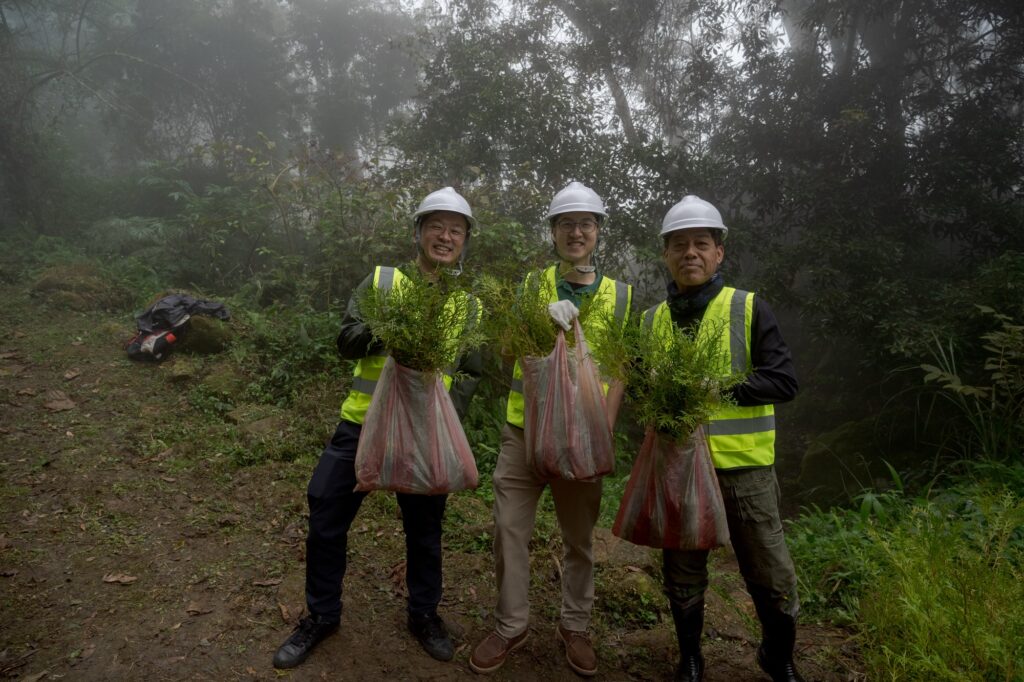
Furthermore, there is currently a growing movement in Taiwan towards environmentally conscious and ethically sound products, and companies across all sectors are being called upon to adopt ESG management *6. In this regard, whilst the government’s intervention is strictly limited to acting as a facilitator, it is creating an environment that fosters the further development of environmental and corporate governance by providing platforms for businesses and communities.”
*4 Convention on Biological Diversity (CBD): An international treaty aimed at the conservation of biological diversity, the sustainable use of its components, and the fair and equitable sharing of benefits arising from the utilisation of genetic resources
*5 Nature Positive: An international goal to halt biodiversity loss and put it on a path to recovery (achieving an increase compared to 2020 levels) by 2030
*6 ESG management: A management approach that prioritises the three non-financial factors of Environment, Social and Governance, aiming to achieve both a sustainable society and long-term enhancement of corporate value.
Forest management with consideration for biodiversity conservation
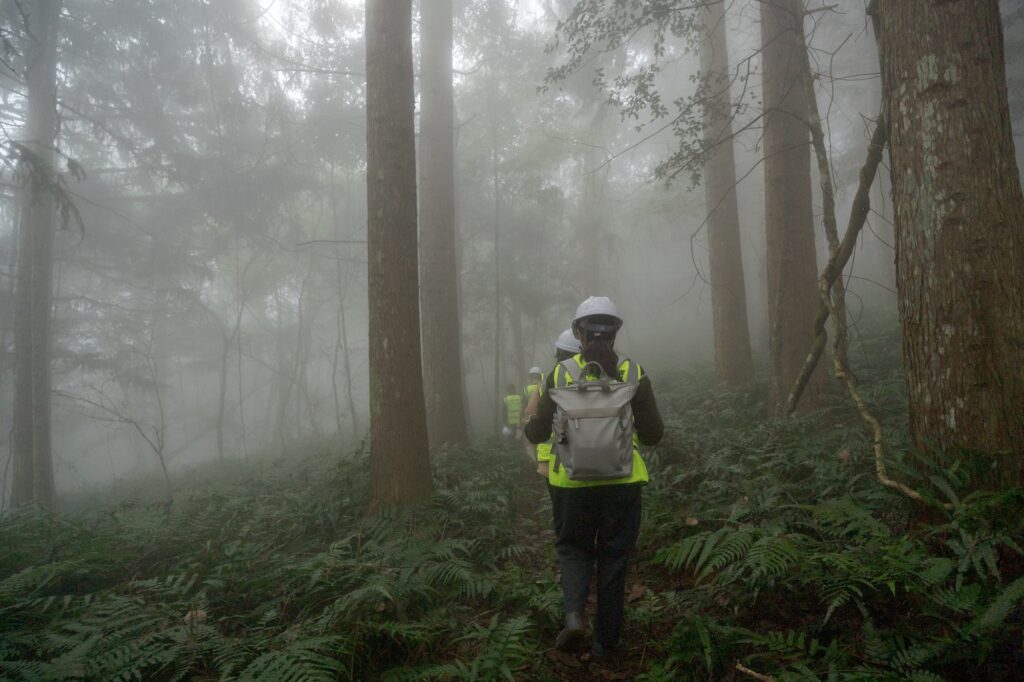
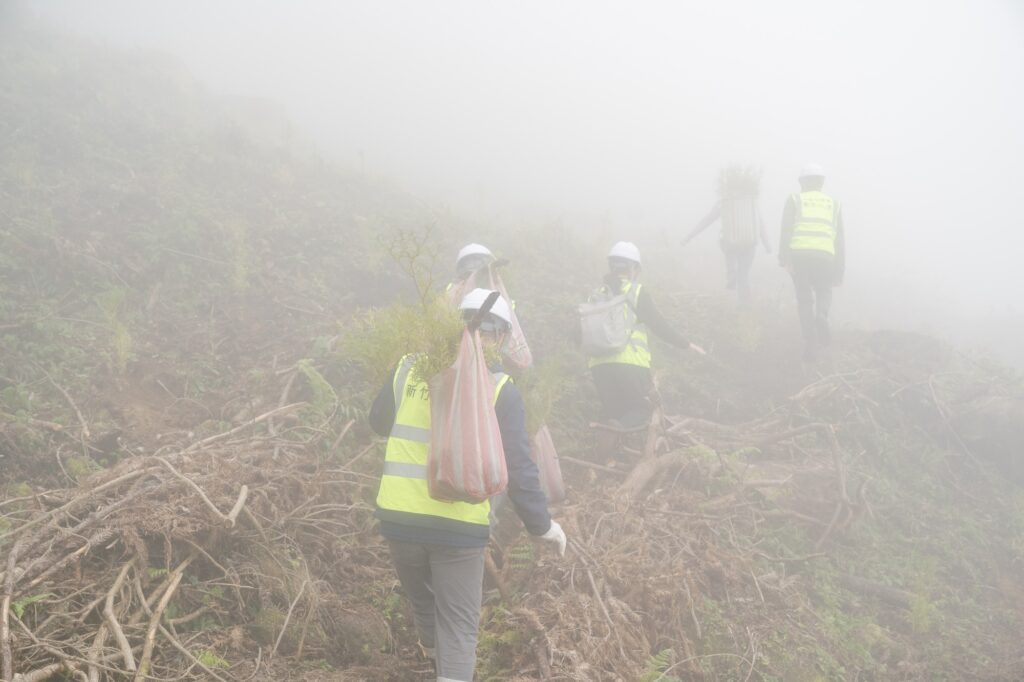
We had to leave the forest road and walk through the woods to reach the planting site. It was a 10-minute walk to our destination. I hadn’t thought it was a great distance, but after walking for a while, we were enveloped in fog so thick that I lost my sense of direction. Relying on the fluorescent vests of the people walking ahead, we made our way through a world that felt like we were walking through a cloud. If we fell even slightly behind, we felt we might get lost. The workers carry saplings on their shoulders and walk through these mountains to transport them. I was told that the number amounts to as many as 500 a day. It is hard labor, but to protect the ground vegetation and preserve wildlife habitats, they do not open unnecessary access roads. I was told that even felled logs are hauled out using cableways.
As we made our way through the forest, thick with ferns and moss, we realized we had emerged into a bright, open space. It seemed there was a cliff on the right. Perhaps feeling sorry for us as we could see nothing but white mist, Elder Gen took out his smartphone and showed us what the view looked like on a clear day.
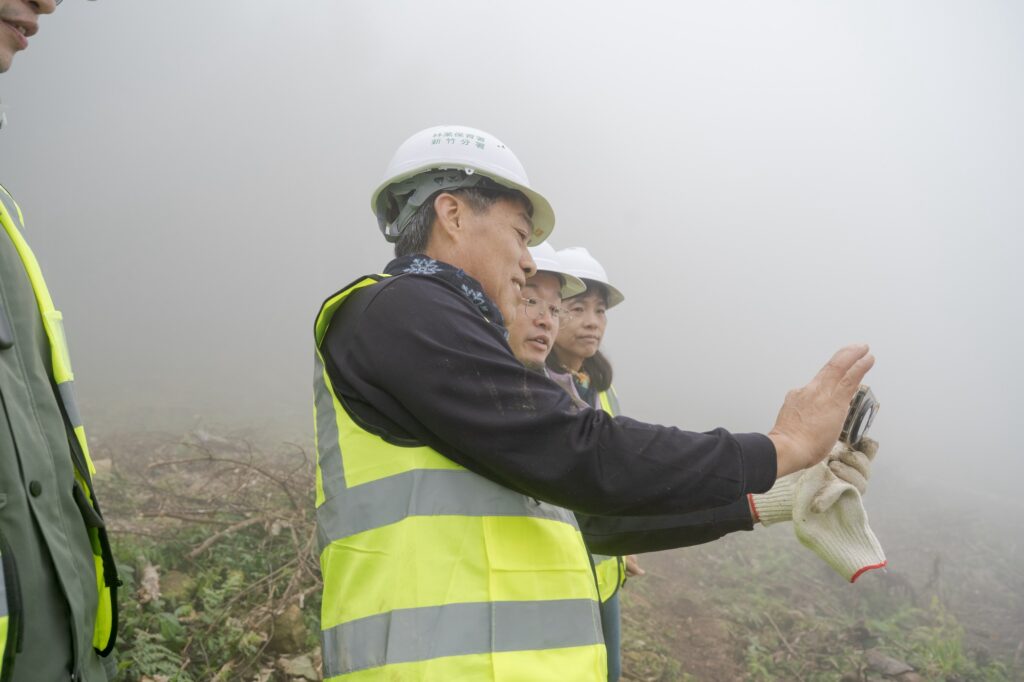
Mr. KEN: It’s a real shame we can’t see it today, but on a clear day, there’s a truly beautiful view stretching out from here. Over there, you can still see a mountain of Japanese cedar planted during the Japanese colonial era, but there is also plenty of virgin forest, and there are observation areas with well-maintained footpaths. Please do come back again. This was originally a degraded state-owned forest, but we have now revived many native species and restored it to its original condition. Consequently, we are currently aiming to make this forestry site an FSC demonstration site for ecosystem services.”
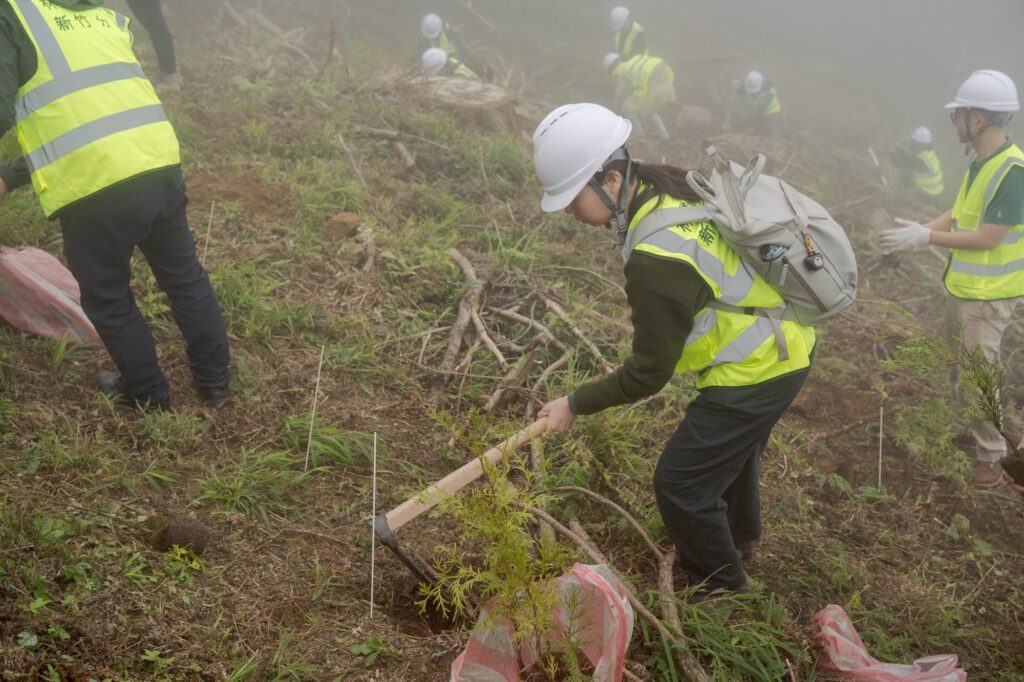
On the slope of the afforestation site we had reached, several white marker poles stood. These markers were reportedly installed by the experimental division of the Forestry and Nature Conservation Bureau to assess plant density. The entire remote forest serves as a testing ground for new forestry practices.
The Saisiyat Tribe’s Traditional Techniques
Another distinctive feature of this afforestation site is the branches arranged in bands along the steep slopes. This is a traditional technique of the Saisiyat people, which may be similar to what is known in Japan as ‘bosa-zumi’ or ‘bosa-oki’.
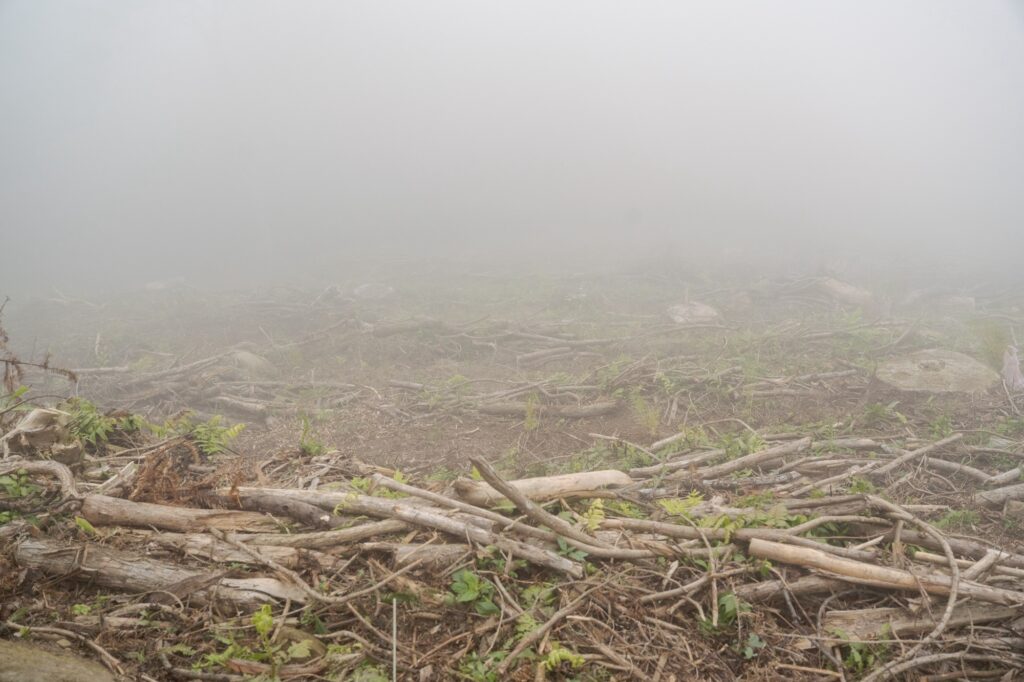
Mr. KEN: ‘We call it “Lahan”, but there is no official name. “Lahan” means “to stretch out in rows” in Chinese. The primary reason for installing Lahan is to protect the saplings.This area is home to many wild animals, such as the Chinese marten, so if we plant saplings, the animals will eat them. However, the survival rate of the saplings we plant reaches 99.9%. The Lahang makes it difficult for animals to approach, thereby preventing them from eating the saplings.
The second reason is to prevent soil erosion caused by typhoons and heavy rain. Even when large volumes of water flow down during heavy rain, the water is dispersed on both sides of the branches. The third reason is to protect the soil from drying out and to enhance its water retention capacity. After all, we cannot go and water the saplings ourselves.In the morning, the branches absorb water vapour from the soil, and when the sun comes out, they slowly release moisture. In other words, it is as if the trees are watering themselves naturally. These effects help to retain moisture and nutrients in the soil, accelerating the trees’ growth.
Furthermore, by making effective use of forest residues generated during felling and thinning, this also leads to a reduction in CO₂ emissions. Currently, such methods are attracting attention as nature-based solutions (NbS), but the former Forestry Bureau (now the Forestry and Nature Conservation Agency) did not understand them at all. For us, it was traditional wisdom passed down from our ancestors, but they have finally recognized and appreciated its value.”
Towards improving timber self-sufficiency
It is said that the highest-grade timber from Taiwan cypress harvested from plantation forests is traded at high prices as material for luxury coffins intended for the wealthy. Most of this high-grade timber is reportedly sent to Kyushu, from where it is sold to various regions. Other building materials are processed and sold domestically as domestic timber, but the volume is by no means large.To begin with, Taiwan’s forests consist largely of natural forests, with plantation forests accounting for only about 20 per cent of the total. Furthermore, as the production of domestic timber had been suspended for many years in Taiwan, there has been a disruption in the forestry supply chain. Consequently, the current production volume of domestic timber remains low, and prices are high. Therefore, the Forestry and Nature Conservation Bureau is reportedly implementing various initiatives to improve the self-sufficiency rate of domestic timber.
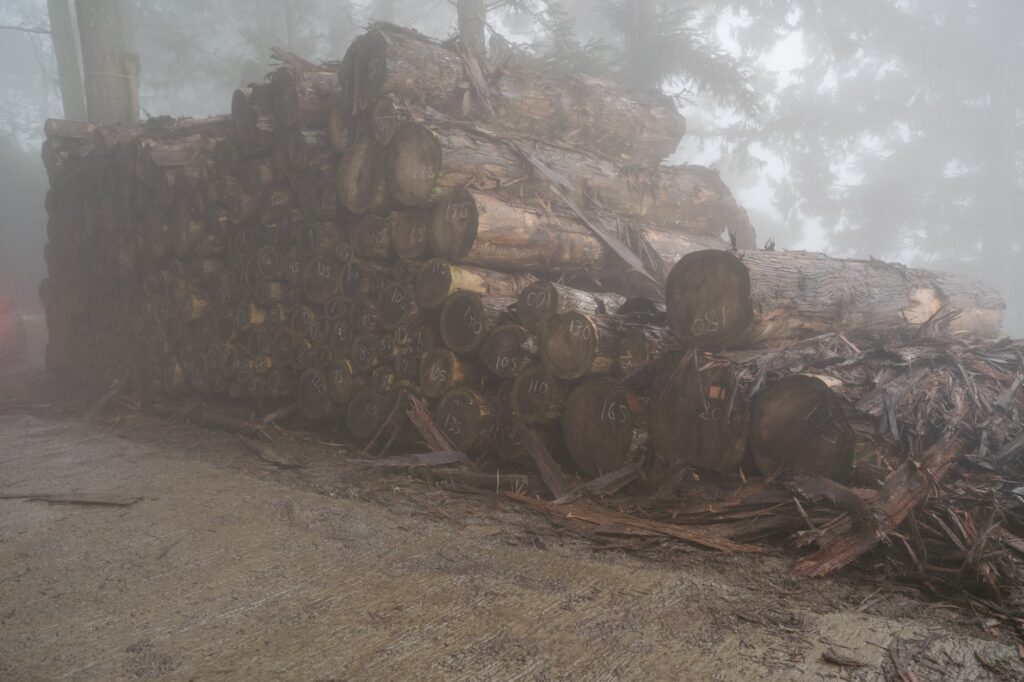
Director SHIA: ‘To promote the use of domestic timber, we are encouraging its use in school desks and chairs. As schools use a vast number of desks and chairs, which need to be replaced regularly, if we can meet all this demand with domestic timber, it will further boost the production and sales of domestic timber. Furthermore, we are providing various forms of support to the production side, particularly for on-site processes such as felling, intermediate processing, collection and drying, including subsidies for the purchase of machinery.
We are also continuing our efforts to raise public awareness, promoting the concept of ‘local production for local consumption’ and methods for reducing carbon footprints※7, to foster public understanding. In schools, we are promoting ‘wood education’ through environmental education, creating opportunities for children to interact with wood in their daily lives. Through such activities, we hope that by helping people appreciate the importance of local timber and the interrelationship between timber and humanity, the public will become more receptive to domestically produced timber.”
*7 Carbon Footprint of Products: The greenhouse gas emissions generated throughout the entire life cycle of a product or service (raw materials, manufacturing, distribution, use and disposal).
This interview, made possible with the cooperation of the Forestry and Nature Conservation Agency and the Saisiyat people, allowed us to experience first-hand the sincere commitment of everyone involved—including government bodies, research institutions, FSC certification bodies and forestry workers—as they collaborate across sectors to tackle the multifaceted challenges facing our forests.If this initiative spreads across Taiwan, the term ‘Guardian Mountain of the Nation’—which protects people from disasters and bestows abundant blessings—will surely regain its original meaning, and Taiwan’s rich forest culture will undoubtedly flourish. (4 December 2025, on-site report)
SeriesInto Taiwan’s Beautiful Forests
Into Taiwan’s Beautiful Forests
Located about 107 kilometers from Japan’s Yonaguni Island, Taiwan lies in the Pacific Ocean in East Asia. Owing to its lush greenery and beautiful island landscape, it was once called “Formosa,” meaning “beautiful island” in Portuguese. Roughly the same size as Kyushu, about 60% of Taiwan’s land is covered by dense forests. These forests are home to a remarkable diversity …
“Achieving 100% FSC® Certification” Reveals a New Future for Taiwan’s Forestry Industry
In December 2024, all forests managed by Taiwanese authorities achieved FSC certification *1. The total forest area covered is approximately 1.6 million ha, about 71.5% of Taiwan’s total forest area. Just five years after the initiative began, Taiwan has reached the highest certification rate in Asia. What is happening now in Taiwan’s forests? We spoke with Director General Lin Hwa-ching …
History of Taiwan’s Forests
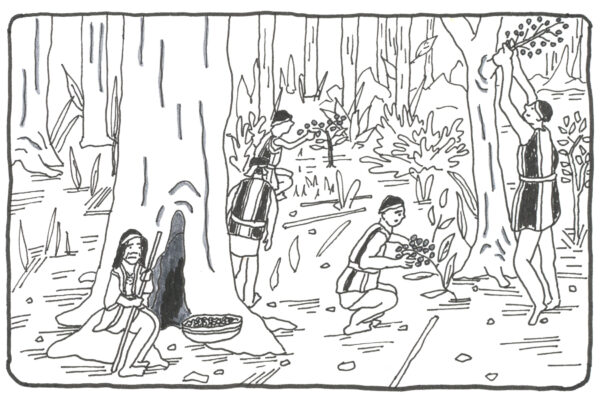
Taiwan’s forests have long been intertwined with people’s lives, cultures, and economy, serving as a mirror of each era. Tracing the history of Taiwan’s forests reveals the path of those who lived with the forests through turbulent times. Prehistoric Era – Late Qing Dynasty Sustainable Forest Stewardship by Indigenous Peoples Since prehistoric times, Taiwan’s Indigenous peoples*1 have protected the island’s …
Related articles
“Achieving 100% FSC® Certification” Reveals a New Future for Taiwan’s Forestry Industry
In December 2024, all forests managed by Taiwanese authorities achieved FSC certification *1. The total forest area covered is approximately 1.6 million ha, about 71.5% of Taiwan’s total forest area. Just five years after the initiative began, Taiwan has reached the highest certification rate in Asia. What is happening now in Taiwan’s forests? We spoke with Director General Lin Hwa-ching …
Into Taiwan’s Beautiful Forests
Located about 107 kilometers from Japan’s Yonaguni Island, Taiwan lies in the Pacific Ocean in East Asia. Owing to its lush greenery and beautiful island landscape, it was once called “Formosa,” meaning “beautiful island” in Portuguese. Roughly the same size as Kyushu, about 60% of Taiwan’s land is covered by dense forests. These forests are home to a remarkable diversity …
History of Japanese Forestry
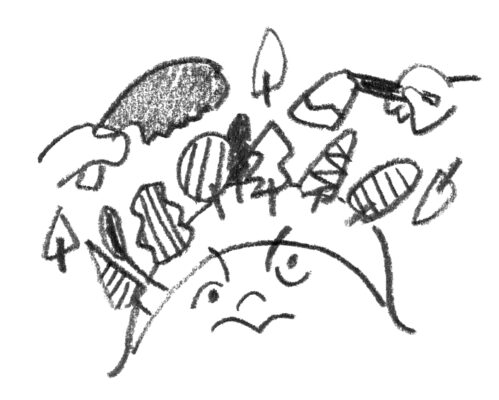
Japan is a forest nation with 70% of its land covered by forests. Forests have been indispensable for daily life, culture, and urban development. Ancient Times (the late 6th century) to the Early Modern Period (the 19th century) From the Asuka period (from the late 6th century) to the Edo period (until the 19th century), huge amounts of timber were …
History of Taiwan’s Forests
Taiwan’s forests have long been intertwined with people’s lives, cultures, and economy, serving as a mirror of each era. Tracing the history of Taiwan’s forests reveals the path of those who lived with the forests through turbulent times. Prehistoric Era – Late Qing Dynasty Sustainable Forest Stewardship by Indigenous Peoples Since prehistoric times, Taiwan’s Indigenous peoples*1 have protected the island’s …
